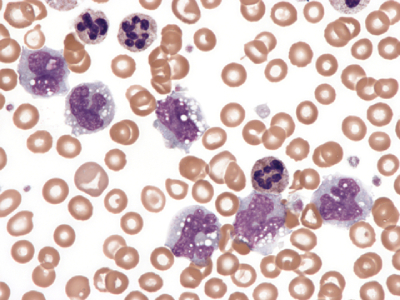
Sumitomo Pharma America, Inc. announced that the FDA granted Fast Track designation to DSP-5336 for the treatment of patients with relapsed or refractory acute myeloid leukemia (AML) with a KMT2A rearrangement, also known as, mixed lineage leukemia rearrangement (MLLr) or nucleophosmin mutation (NPM1m). DSP-5336 is an investigational small molecule inhibitor of the menin and mixed-lineage leukemia (MLL) protein interaction, which plays key roles in gene expression and protein interactions involved in many biological pathways, including cell growth, cell cycle, genomic stability, and hematopoiesis.
FDA Fast Track Designation is granted to investigational therapies being developed to treat serious or life-threatening conditions that demonstrate the potential to address unmet medical needs.
"For patients and families facing a diagnosis of relapsed or refractory acute myeloid leukemia, significant unmet medical needs remain – and we share in their urgency to identify and advance new treatment pathways," said Tsutomu Nakagawa, Ph.D, President and Chief Executive Officer of SMPA. "We are encouraged by FDA's decision and look forward to working closely with the agency as we continue our clinical development of DSP-5336."
Updated data from the ongoing open-label, dose escalation and optimization portion of the Phase 1/2 study for DSP-5336 were presented at the European Hematology Association (EHA) 2024 Hybrid Congress, building on preliminary data presented at the 2023 American Society of Hematology (ASH) Annual Meeting. Objective response was observed in 57% (12/21) of patients, which included responses in patients with both Nucleophosmin 1 (NPM1) mutation and KMT2A (MLL) rearrangement. The proportion with complete remission or complete remission with partial hematologic recovery (CR/CRh) was 24% (5/21 patients).
To date, DSP-5336 remains well-tolerated with no dose limiting toxicity (DLT) observed and no significant cardiac signal nor treatment-related discontinuations or deaths. No significant drug-drug interactions with azoles have been identified and repeat dosing results in minimal to no pharmacokinetic accumulation. Importantly, no differentiation syndrome (DS) prophylaxis was needed, and the three cases of DS reported (5%) were manageable and did not result in intensive care unit (ICU) stays or discontinuation of DSP-5336.
"Management of AML continues to be challenging with limited options for which there are currently no approved targeted therapies to treat AML with KMT2A (MLL) rearrangements or NPM1 mutations, leaving a serious unmet medical need," said Jatin Shah, M.D., Chief Medical Officer – Oncology at SMPA. "DSP-5336 has shown promising clinical activity, and menin inhibitors have tremendous potential to impact the outcomes of these types of acute leukemia. We are excited by these early results and FDA Fast Track Designation and look forward to working closely with the agency and our collaborators to rapidly advance this program with the goal of providing a well-tolerated and effective targeted treatment option for patients with relapsed or refractory acute myeloid leukemia."
Leukemia is a type of cancer that forms in blood-forming tissue, characterized by the uncontrolled growth of blood cells, usually white blood cells, in the bone marrow. Acute leukemia, a form of leukemia, requires immediate treatment as blood cells multiply rapidly leading to a sudden onset of symptoms. Approximately 30% of AML patients have NPM1 mutations and 5-10% of AML patients have KMT2A (MLL) rearrangements.
Subscribe to our e-Newsletters
Stay up to date with the latest news, articles, and events. Plus, get special offers
from American Pharmaceutical Review – all delivered right to your inbox!
Sign up now!