Abstract
This review is directed toward out-of-specification investigations with an emphasis on conducting laboratory investigations when employing Advanced Microbiological Methods that reflect the industry transition from growth-based methods to molecular methods.
Introduction
The Barr Decision (United States of America versus Barr Laboratories, Inc. 1993) forever changed how pharmaceutical companies dealt with Out-of-Specification (OOS) test results. Federal Court Judge Wolin ruled that OOS results require a failure investigation, if a laboratory error was found the result was deemed to be invalid and the test could be repeated, but merely retesting to get passing results was unacceptable. In a belated response to the U.S. versus Barr Laboratories decision, the 2006 FDA issued a Guidance for Industry: Investigating Out of Specification (OOS) Test Results for Pharmaceutical Production, which applies to laboratory testing results for products regulated by the Center for Drug Evaluation and Research (CDER). The FDA guidance does not extend to microbiological failure investigations, however. Consequently, the PDA established a task force, which I was a member of, to provide approaches specific to the pharmaceutical industry, for investigating various types of microbial data deviations based on current scientific knowledge and modern testing technologies.
Considerable attention has been given recently to OOS microbiological investigations during regulatory inspections of pharmaceutical manufacturers and their contract testing laboratories and was the subject of the 2022 PDA Technical Report No. 88 entitled Microbial Data Deviation Investigations in the Pharmaceutical Industry. The term microbial data deviation was selected to include tests without drug product specifications like environmental, water, and in-process bioburden monitoring. What is still lacking is a comprehensive review of OOS investigations when generating failing results, using an Advanced Microbiological Method (AMM).
At first sight, pharmaceutical professionals and regulators may react, asking why would there be a difference between conducting a laboratory or manufacturing investigation when using a compendial test method or an alternative method.
The key differences between a compendial test method and an alternative method are as follows:
- The increased complexity of the analytical method and unfamiliarity with the methods when moving from compendial to alternative methods.
- Extension of aseptic techniques from the prevention of microbial contamination to include genomic contamination.
- More opportunities for method automation and closed system with AMM, reducing risk.
- The challenging databases and bioinformatics associated with molecular-based assays.
- The absence of a microbial isolate for identification, more typical of cultural methods, to assist in the investigations.
- Detection of multiple microorganisms based on their genomic sequences, but not always isolated by cultural methods, becoming a compliance and safety challenge.
- Additional information on the metabolism, strain virulence, and antibiotic resistance of the microorganisms detected was generated by Whole Genomic Sequencing (WGS).
- Quality Assurance organizations and external auditors are more unfamiliar with AMM than compendial test methods resulting in citations.
Laboratory Investigations with Compendial Growth-Based Methods
Simply stated the objective of a laboratory investigation is to confirm that no laboratory error has occurred, and whether the OOS result may be viewed as test failure or an error with an opportunity for retesting. If a laboratory error was found, the assignable cause of the error should be established to allow the laboratory management to implement corrective and preventative actions (CAPA) to reduce future errors and the result is declared invalid.
Laboratory errors may be viewed as analyst errors, but they may be often related to managerial shortcomings including poorly written policies and procedures, poor supervision, short staffing, inadequate training, and poorly maintained equipment. Experience has shown that it is easier to train an analyst to routinely run a test using an AMM than training them to troubleshoot problems with the instrumentation and conduct a laboratory investigation. The latter requires a higher level of academic training, skill, and experience supported by good supervision. These requirements are mandated 10 | | May/June 2024 by Good Manufacturing Practices (GMP) regulations. In addition, once hired and trained a company must have adequate pay scales, working conditions, and opportunities for advancement to retain experienced analysts or at least moderate the staff turnover.
With growth-based methods, such as the compendial sterility test, microbial enumeration, and test for specified microorganisms, there are typically no positive or negative controls during testing, which are replaced with incoming media inspection and growth promotion testing. Incubating an uninoculated culture is not an adequate negative control, which should include the addition of the diluent as a manipulation control. A premium is placed on the aseptic technique and the ability of the analyst to detect microbial growth in broth and count colonies on plates. The results are usually recorded in a paper document or typed into a computer and are subjective compared to more analytical methods. Barcode readers have simplified the documentation of the identification of media lots, test methods, data entry, review, transfer, and retrieval.
One underappreciated characteristic of growth-based microbial methods, other than their counting limitations, is their unintended selectivity. The microbial diversity in the test material is often not captured. For example, frequently only a single microorganism is isolated after subculture on solid media in sterility test failures. Furthermore, this selectivity is compounded when the contaminant grows in only one of the two sterility test media when it is capable of growing in both. The reason for this selectivity is that the fastest growing bacterium supported by the media and incubation conditions suppresses the growth of other organisms, which is termed in food microbiology as the Jameson Effect (Jameson, 1962). An early 16S rDNA-based sequence analysis that compared the bacterial diversity of purified water in pharmaceutical manufacturing to flow cytometry and soybean-casein digest and R2A agar demonstrated that conventional plate counts underestimated both the numbers and diversity of the bacterial content (Kawai et al, 2002). This diversity of microorganisms in the test material will be even better revealed using Next Generation Sequencing (NGS), which may complicate both laboratory and manufacturing investigations as multiple microorganisms will be required to be evaluated.
Points to consider when conducting OOS investigations on growth-based methods include the following:
- Training and experience of the microbiologist conducting the test.
- Adequacy of the method of suitability testing for the product.
- OOS and failure rate of both the test material and the analyst.
- Laboratory facility design and operation.
- Sampling, sample handling and storage, and container integrity.
- Any breach of aseptic technique during the test.
- Adverse environmental and personnel monitoring trends associated with the test area and analyst.
- Incubation conditions of the media.
- Second-person review of the results and data entry.
- Availability of retained test materials, diluents, glassware, and reagents for evaluation for microbial contamination.
- Identity of the contaminant isolated from the media.
- Determination if the source of isolated contaminant is more likely from the test area than the manufacturing area.
Bear in mind that the automation of the incubation and reading of the enumeration media associated with these tests is viewed in the USP General Notices 6.30 Alternative and Harmonized Methods and Procedures as an improvement to the existing methods and not an alternative microbiological method with the method validation limited to comparability. In addition to the above Point to Consider, the maintenance and calibration of the automated incubator and plate readers will be reviewed, and results confirmed by visual inspection of the plates.
Out-of-Specification Investigations with Advanced Microbiological Methods
The scope of this discussion will be limited to solid phase cytometric, respiratory, ATP bioluminescence, MALDI TOF mass spectrographic, and PCR amplification methods. Examples citing using commercially available instrumentation and reagents should not be viewed as an endorsement, but used to illustrate how OOS investigations may be conducted. It should be acknowledged that false results (termed consumer risk) may impact patient safety more than false positive results (termed Producers Risk).
Solid Phase Cytometry
The ability to detect and enumerate vital-stained microbial cells captured on a non-fluorescent, flat membrane using laser scanning and image capture allows a sterility test to be completed in less than four hours, which is unique even amongst Advanced Microbiological Methods. A fluorogenic substrate is transported in a microbial cell, cleavage by an esterase and fluorescein accumulates within the cell due to the intact cell membrane in a viable cell. Major challenges with the technology are to differentiate between fluorescent events arising from subvisible auto-fluorescent particles and viable microbial cells. As a preliminary to method suitability with challenge organisms, the applicability of the method for each drug product must be determined by filterability and particle evaluation. When using a qualified test method, if the number of auto-fluorescent particles obscure or make it impractical, due to their high number, to verify for the presence of viable microbial cells, the test would be invalidated and repeated.
The inability to routinely recover and identify the contaminant may appear to limit the laboratory and manufacturing investigations. Culturing the residual product in the tested containers or resampling the batch and conducting an investigative growth-based test may 12 | | May/June 2024 be an acceptable option. This limitation has been over-emphasized and may be overwhelmed by the obvious benefits of the rapidity and sensitivity of the sterility test and the opportunity to begin an investigation within a day of conducting the test. Information on the type of microorganism detected can be inferred by the size and shape of the image and its fluorescence intensity. It should be emphasized that “a significant few” bacteria derived from human skin, utilities, and controlled environment are common to both the testing and manufacturing areas and their identification may add little to the investigation. Furthermore, given the order of 0.1% of microorganisms in common environmental samples may be isolated on a standard microbiological culture medium, then most organisms cannot be identified, and their presence investigated. This was described as “the great plate count anomaly” (Staley and Konopka,1985).
In addition to the above Points to Consider (1 through 10), the incoming quality control testing of the activation and labeling reagents would be reviewed, and the performance of the ScanRDI Microbial Detection System can be confirmed periodically with fluorescently labeled beads or compendial QC microorganisms.
Respiratory Methods
The growth of microorganisms in liquid culture media used for sterility testing may be detected using sensors within the incubated closed media vials for pH change, CO2 production, changes in headspace composition, or pressure changes in place of inspection of the media for signs of microbial growth. These signals may be monitored continuously with two consecutive signals above a threshold indicative of a positive result. In a clinical setting, the organism detected using the BacT/ALERT System is often identified directly from the broth using MALDI-TOF mass spectrometry before isolation by subculturing on solid media to make clinical decisions.
Inoculation of the closed culture bottles through a rubber septum using a sterile syringe is a low-risk aseptic manipulation when conducted in either an aseptic processing area or within a laminar flow hood in the microbiology laboratory, so contamination of the test material is less likely. However, the Points to Consider (1 through 12) listed above would be applicable in a laboratory investigation.
ATP Bioluminescence
ATP production by all growing microorganisms in liquid culture or as colonies on membranes placed on solid media may be used to detect and enumerate microorganisms. CRL/Celsis in collaboration with Sartorius developed an aseptic sampling device for their enclosed membrane filtration canister and low ATP soybean-casein and thioglycolate broth that may be purchased from their media partners for sterility testing. ATP bioluminescence may be used to measure the ATP level in the broth aseptically sampled not continuously, but at prescribed intervals. It may be necessary to homogenize fungal growth to get a strong ATP signal. The Points to Consider (1 through 12) listed above would be applicable. In a laboratory investigation, the signal-to-noise ratio around the ATP level in the media and the differences in ATP content of bacteria, yeast, and molds should be considered.
Universal PCR Amplification Method for Sterility Testing
The use of universal primers converts a PCR Amplification Method from a screening method for a specific target microorganism using ribosomal RNA and RT-PCR as a sterility test. Potential challenges are cell harvesting, lysis, nucleic acid extraction and purification, the universality of the primers, and hence the detection method (Denoya, 2011). Background DNA in mammalian cell cultures may be eliminated using the DNase step. As the limit of detection may be in the range of 10-100 cfu, a pre-incubation step using a microbiological culture medium to increase the target numbers may be necessary to eliminate possible false negatives.
False positives may be mitigated by the following:
- Well-designed validation studies and method suitability testing of individual products.
- Trained analysts.
- Segregated work areas with dedicated air handling systems, ultraviolet lamps in laminar flow hoods, and dedicated equipment and supplies for reagent preparation, extract, and PCR amplification.
- Appropriate Personnel Protection Equipment (PPE).
- Practices to minimize aerosols.
- Unidirectional workflows.
- Inclusion of internal amplification control standard in every test.
Biofluorescent Particle Counting Methods
Pharmaceutical QC microbiology laboratories conduct many more tests for pharmaceutical-grade water, compressed air, in-process material bioburden, and airborne viable particulates in cleanrooms than pharmaceutical ingredient and finished product testing. There is pronounced interest in replacing once-per-shift growth-based microbial monitoring with extended incubation times with continuous biofluorescent particle monitoring as an in-process control during aseptic manufacturing to improve product quality and patient safety.
Again, the viable fluorescent particle cannot be readily collected, cultured, and identified. However, this technology has not been extended to surface monitoring, so airborne microorganisms are likely to be recovered and identified from neighboring horizontal surfaces using traditional methods.
Alternative Microbiological Methods for Identification and Typing
MALDI TOF Mass Spectroscopy for Microbial Identification
MALDI-TOF MS, because of its short time to result and low unit costs per identification, has become the first-line microbial identification method in larger hospital clinical microbiology laboratories. Like all identification technologies, it has limitations due to the underlying technology and possible gaps in its current database. The technology produces a mass/charge fingerprint, which is matched to the database to give the identification. The test sample must be a pure culture, and if the whole cell method gives a no signal or a low probability match, the cell extraction option must be employed as a repeat test. As with all AMM, to ensure the identification is reasonable, other attributes including the source of the microorganism, cellular morphology, staining reactions, physiological and biochemical properties, and growth requirements should be considered before accepting the identification. This is termed a polyphasic approach (Anders et al, 2007).
PCR Amplification and Sequencing Methods
Simply stated the steps for PCR amplification are the extraction of the targeted DNA from the microbial cells, denaturing of the template DNA into single-stranded DNA, primers annealing to their complementary target sequence, and extension of primers by DNA polymerization to generate a new copy of the target DNA which acts as targets for the next cycle. The cycle is repeated exponentially to amplify the target which may be detected by fluorescent probes. This is much more rapid than the generation time of a cultured microorganism. The primer for the 16S rRNA gene, which is highly conserved in bacterial genes, is sequenced to identify the species using capillary electrophoresis. The MicroSeq System based on this technology is widely used in the pharmaceutical industry.
How can false positives and false negative results be identified? The inclusion of internal controls in each molecular assay or daily runs may alleviate these issues.
False positives may be generated from background DNA contamination from the test sample, reagents, labware, or testing environment. As RNA is present in higher amounts than DNA and is a more transitory target indicative of viable microbial cells, it can be converted into DNA which is amplified using the enzyme reverse transcriptase (RT PCR). Carry-over from earlier PCR reactions can be eliminated by good laboratory practices, decontamination of work areas, and strict physical separation of the pre-amplification and post-amplification areas. Contaminating PCR materials may be destroyed by chemical treatment, UV irradiation, and enzymatic digestion. These concerns are receding with the advent of self-contained microfluidic cartridges, pouches, or discs that integrate sample preparation, amplification, and detection in a closed system (Yang and Rothman, 2004).
False negatives are usually the result of the small sample volume permissible for PCR and problems related to PCR processing. The test sample may be concentrated by culture enrichment, centrifugation, filtration, or target absorption. PCR processing problems may be related to inadequate removal of inhibitors from the sample, poor DNA extraction from microbial cells, or poor DNA recovery after extraction and purification steps.
An alternative to traditional PCR is isothermal-based amplification methods. These methods can be conducted without undergoing repeated thermal denaturation procedures and do not require sophisticated instruments. Typically, a loop-mediated isothermal amplification (LAMP) mechanism comprises two pairs of primers (inner and outer) and is dependable to strand displacement synthesis of DNA polymerase to produce loop amplifications. LAMP has been widely used for the diagnosis of biological specimens and is commercially available for environmental monitoring applications (Zulkifl I et al, 2017; Gaoh et al, 2023).
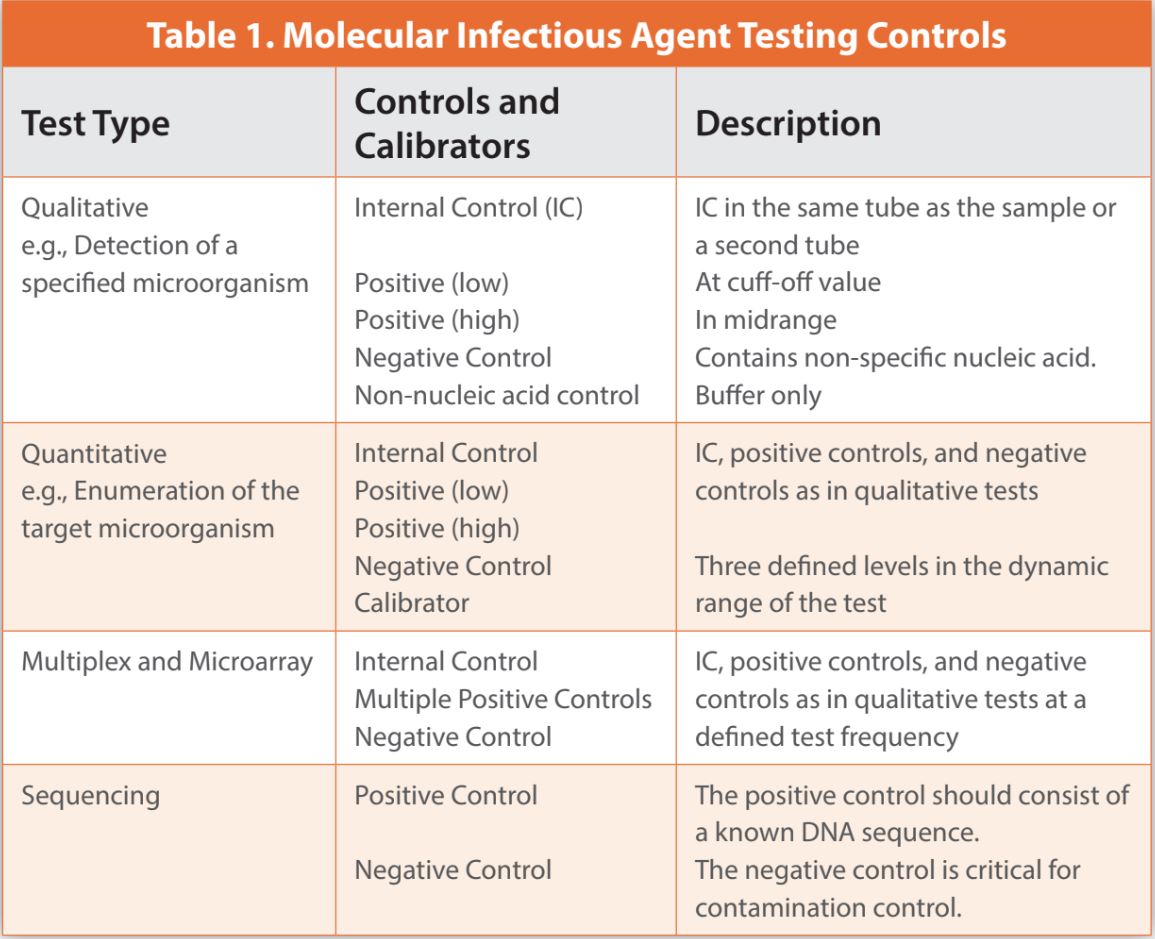
For qPCR assays for food-borne pathogens forward and reverse primers and probes are employed with their respective internal controls plus an internal amplification control DNA. For a reliable assay of the internal amplification control (IAC) DNA for the target bacterium the Crossing threshold (Ct) should be no less than 24 cycles in the presence of the extracted target DNA and no more than 32 cycles with a DNA-free water negative control. To obtain a 100% sensitivity the target should be 10-fold greater than LOD (Chen et al, 2023) Note: The LOD is the analyte that is detected 95% of the time at that microbial density. It is a common mistake to define the lower limit of detection as the lowest analyte concentration that can be detected by the PCR assay, as the reportable LOD, as these levels may only be detected a small percent of the time. It is recommended that the LOD95 be determined by Probit Analysis (Wolk and Marlowe, 2011). With molecular methods, controls are critical in establishing whether an assay was valid, as part of a larger laboratory investigation. Table 1 describes the controls expected for qualitative, quantitative, multiplex PCR assays, and Whole Genome Sequencing (Bankowski, 2016).
Next Generation Sequencing
Next-generation sequencing (NGS) includes single nucleotide polymorphism (SNP) and multi-locus sequence typing (MLST) typing methods as well as whole gene sequencing (WGS). High-throughput WGS can be used to determine the whole genome of bacteria for microbial typing and antibiotic resistance profiling or determine the overall microbiota composition of a given sample, e.g., gut microbiota, without needing to culture the bacteria. This represents a transition from isolate-based microbiology to molecular microbiology. However, the huge amount of data produced by NGS will tax the computing capacity and will lead to difficulties in managing, interpreting, and storing the results to meet GMP compliance in pharmaceutical microbiology laboratories. A recently published review of the use of WGS by federal agencies to promote food safety is informative (Stevens et al, 2022).
Manufacturing Investigations
After the completion of the OOS laboratory investigation and no error was found to invalidate the test, the result is considered a failure, and a manufacturing investigation is initiated to determine the probable cause of the failure. Unlike the laboratory investigation which is usually conducted by the laboratory supervisor and the quality control unit, a broader team is assembled including representation from quality, manufacturing, process engineering, maintenance, and the microbiology laboratory.
The Points for Consideration in a manufacturing investigation include the following:
- Review of the batch record for any manufacturing deviations
- Review of OOS and failure rates of the drug product over the past year or at least 10 consecutive batches with a low-volume product
- Determine if the manufacturing process extends to other products resulting in an expansion of the investigation.
- Review the microbial monitoring of utilities and the manufacturing area for excursions and adverse trends.
- Visit the manufacturing area, inspect the process equipment, and interview the operators in that area.
- Conduct investigative microbial monitoring and testing.
- Develop possible causes of the failure and systematically eliminate those that are not supported to arrive at the most probable cause.
- Recommend to the quality unit the disposition of the implicated batches and product lines.
- Develop a Corrective Action and Preventative Action (CAPA)
- Implement the CAPA
- Monitor future batches to confirm the CAPA effectiveness.
- As required by GMP regulations notify the governing regulatory agencies.
With traditional culture-based methods, an isolate of the contaminant was always available for identification and further characterization. Many AMMs, including solid phase cytometry, PCR amplification, and biofluorescence particle counting, do not readily allow for the isolation of viable microorganisms. Given the sensitivity and rapidity of these microbial methods, their benefits, clearly to the author, outweigh this disadvantage. However, it may take time for quality organizations and regulators to change their compliance expectations in terms of how a manufacturing investigation is conducted. For example, BFPC provides continuous air monitoring data, cannot typically isolate viable microorganisms but allows for line clearance during aseptic filling reducing the importance of protracted investigations to product release (Merker et al, 2023).
Conclusions
Policies and procedures addressing AMM investigations must be implemented consistent with industry practice and regulatory expectations. Training must reinforce these procedures. Ensure that the investigation program is adequately documented, as it will undoubtedly be subjected to future external audits by customers and regulators. As new testing technologies are introduced, these investigation procedures must be reviewed and updated.
References
- Anders, H.-J., M. Keller, M. Berchtold, and W. Hecker. 2007. A polyphasic approach to microbial identification. Amer. Pharm. Rev. Published October 1, 2007
- Bankowski, M. J. 2011 Chapter 56 Molecular Test Validation, Monitoring, and Quality Control in Molecular Microbiology -Diagnostic Principals and Practice. Second Edition Persing, D.H., F. C. Tenover et al (editors) ASM Press, Washington D. C. p885-890
- Chen, Y. et al 2023 FDA Bacteriological Analytical Manual, Chapter 29 Cronobacter Pages 1-23
- Jameson, J. E. 1962 A Discussion of the Dynamics of Salmonella Enrichment J. Hyg. 60(2):193-207
- Denoya, C.D. 2011 PCR and Other Nucleic Acid Amplification techniques – Challenges and Opportunities for their Application to Rapid Sterility Testing in Rapid Sterility Testing J. Moldenhauer (editor) PDA/DHI Publishing, Bethesda, MD p397-431
- Gaoh, S.D., O. Kweon et al 2023 Loop-mediated Isothermal Amplification (LAMP) Assay for Detecting Burkholderia cepacia Complex in Non-sterile Pharmaceutical Products. Pathogens 10: 1071-1087
- Kawai, M., E. Matsutera, et al, 2002 16S Ribosomal DNA-Based Analysis of Bacterial Diversity in Purified Water Used in Pharmaceutical Manufacturing Processes by PCR and Denaturing Gradient Gel Electrophoresis Appl. Environ. Microbiol. 68(2): 699-704
- Merker, P., T. Cundell, et al, 2023 Opinion: Revisit Regulatory Expectations for Micro ID in Grade A Environments for Non-growth Methods. PDA Letter November 25, 2023
- Staley, J.T. and A. Konopka. Measurement of in situ activities of non-photosynthetic microorganisms in aquatic and terrestrial habits. Ann. Rev. Microbiol. 1985; 39: 321-346
- Stevens, E. I., H.A. Carlton, et al, 2022 Use of Whole Genome Sequencing by the Federal Interagency Collaboration for Genomics by Food and Feed Safety in the United States. J. Food Protection 85(5): 755-772
- Wolk, D. M. and E. M. Marlowe, 2011 Chapter 55 Molecular Method Verification in Molecular Microbiology -Diagnostic Principals and Practice Second Edition Persing, D.H., F. C. Tenover, et al (editors) ASM Press, Washington D. C. p861-883
- Yang, S., and R. E. Rothman, 2004 PCR-based diagnostics for infectious diseases: Uses, Limitations, and future applications in acute-care settings The Lancet Inf. Dis. 4: 337- 348
- Zulkifli, S.N. et al, 2017 Detection of contaminants in water supply: A review on state-of-the-art monitoring technologies and their applications. Sensors and Actuators B 255: 2657–2689
Author Details
Tony Cundell, PhD- Principal Consultant, Microbiological Consulting, LLC
Publication Details
This article appeared in American Pharmaceutical Review: Vol. 27, No. 4 May/June 2024Pages: 8-15
Subscribe to our e-newsletters.
Stay up to date with the latest news, articles, and events. Plus, get special
offers from American Pharmaceutical Review have been delivered to your inbox!
Sign up now!