Abhinav Chandolu,1 Aditya Pulliwar,1 Neelam Sharma,1 and Hemant Joshi1,2, 1Tara Innovations LLC, East Hanover, NJ 07936, 2hemantjoshi.tara@gmail.com
Introduction to Vitamins
Vitamins are essential organic compounds vital to human health. They serve as enzyme cofactors that enable enzyme function, making them a core part of metabolic pathways. There are 13 essential vitamins for the body; they are categorized as either water-soluble (C and B Vitamins) or fat-soluble (Vitamins A, D, E, and K).1,2 Water-soluble vitamins support processes like energy metabolism and immune defense but are required to be consumed regularly since they are not stored in the body. Fat-soluble vitamins are stored in the fatty tissues of the body, and they are used for functions such as vision, bone health, antioxidant protection, and blood clotting. Among these fat-soluble vitamins, vitamin D is very important for calcium regulation and immune function.
Forms of Vitamin D3
Vitamin D is available in two forms: Vitamin D2, or ergocalciferol, and Vitamin D3, or cholecalciferol. Vitamin D2 can be sourced from plant-based sources such as mushrooms, fortified plant-based milks, and orange juice. Vitamin D3 can be found in diets that include fatty fish, egg yolks, and fortified cereals and milk. Compared to other vitamins, Vitamin D3 is unique as it can be synthesized by the body. When the skin is exposed to sunlight, the UVB light pierces the epidermis and converts 7-dehydrocholesterol found in the epidermis to previtamin D3, which has to undergo a heat-dependent process to turn into vitamin D3. Figure 1 depicts structures of Provitamin D2, Provitamin D3, Vitamin D2 and Vitamin D3. Provitamins D2 and D3 contain basic steroidal structures.
Metabolism of Vitamin D
Both Vitamins D2 and D3 have a similar metabolic pathway. They both follow a two-step process. Vitamin D, obtained from sun exposure, foods, and supplements, is biologically inert and has to undergo two hydroxylation processes – in the liver and in the kidney to produce an active form.3 To begin with, Vitamin D is transported to the liver, where it undergoes hydroxylation by the enzyme CYP2R1, or vitamin D-25-hydroxylase. Vitamin D2 turns into ercalcidiol, while Vitamin D3 turns into calcifediol (also known as calcidiol). These two compounds are then further transported to the kidneys to be hydroxylated once again by enzyme CYP27B1. The products are ercalcitriol, from ercalcidiol, and calcitriol, from calcifediol, which are the active hormonal forms of Vitamin D2 and D3.
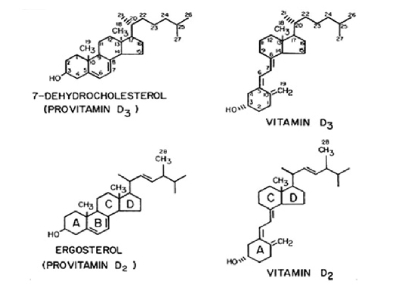
Figure 1. Chemical structures of basic Vitamin D molecules
Both forms lead to active compounds that bind to vitamin D receptors, but D3 stands out when compared to D2.4 Vitamin D3 has a higher affinity for the enzyme CYP2R1, making its hydroxylation process much more efficient. Additionally, D3-derived calcifediol binds more tightly to Vitamin D binding protein, which transports Vitamin D in the bloodstream. This increases the stability and half-life of Vitamin D3 in circulation. While both D2 and D3 can be converted to the active form calcitriol and ercalcitriol, calcitriol, derived from D3, has slightly higher potency in activating vitamin D receptors in target tissues. This makes Vitamin D3 more effective in treatment methods for individuals with a Vitamin D deficiency. Figure 2 depicts the metabolism of Vitamin D3 in the body.
Role of Vitamin D
Vitamin D has a vital role in calcium absorption and bone health. It mainly aids in the absorption of calcium in the intestines, regulates blood calcium concentration, and stabilizes the bone mineral density. A deficiency in Vitamin D may lead to many disorders like rickets, osteomalacia (softening of bones), and, over time, osteoporosis.5
In addition to bone health, vitamin D has been studied for potential roles in immune regulation, cardiovascular health, type 2 diabetes, depression, multiple sclerosis, and weight control.6 However, the evidence for these studies is still insufficient and inconsistent. It is still true that the general population requires adequate amounts of vitamin D for skeletal health, even though these conflicting findings are the result of different research methodologies, baseline vitamin D levels, and genetic variations.
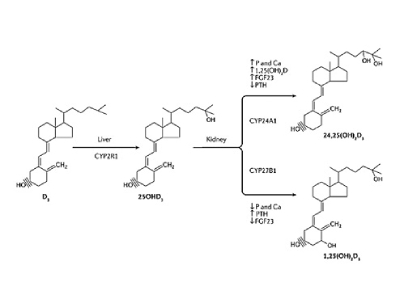
Figure 2. Conversion of Vitamin D3 in vivo.
Climatic conditions, living conditions, life-styles and physiology of people in various parts of the world are different. Table 1 lists the deficiency thresholds and dosing recommendations in various countries. The deficiency threshold is higher in the USA, Europe, Canada and Australia compared to that in the UK and India.
Influence on Vitamin D Levels
Vitamin D levels can be affected by biological, environmental, and lifestyle-related factors. For example, age influences the skin’s ability to synthesize vitamin D3, because the concentration of the compound that produces vitamin D3, 7-dehydrocholesterol, declines with age. This creates the necessity for Vitamin D3 supplement consumption in older individuals.
Table 1. Comparison of Vitamin D deficiency levels and recommended doses in key countries. |
|---|
Country/Organization | Deficiency Threshold | Age-Specific Recommendations |
|---|
USA (IOM/NIH) | <20 ng/mL | 600 IU (19-70 yrs), 800 IU
(>70 yrs) |
UK (NHS/SACN) | <10 ng/mL | 400 IU for all ages (over 1 yr) |
Europe (EFSA) | <20 ng/mL | 600 IU Same for all adults (over 18 yrs) |
Canada
(Canada Health) | <20 ng/mL | 600 IU (<70 yrs), 800 IU
(>70 yrs) |
Australia (NHMRC) | <20 ng/mL | 400 IU (19-50 yrs), 600 IU (51-70 yrs), 800 IU (70+ yrs) |
India (ICMR) | <12 ng/mL | 400 IU Same for all ages >1 yr |
WHO | <20 ng/mL | 200 IU (infants), 400-600 IU (children/adults) |
One of the most important environmental factors influencing vitamin D levels is sunlight exposure. Vitamin D3 production is more during summertime. For vitamin D3 synthesis, the skin needs exposure to UVB light; in the absence of sunlight, vitamin D levels decrease. Vitamin D deficiency is also more common in people who work indoors and or in people who limit their exposure to the sun. The effects of these lifestyle choices can also be exacerbated by geographic location.7 People who live at latitudes above 37° north or below 37° south are also more prone to deficiencies because the sun’s UVB radiation has less effect in these regions, preventing adequate synthesis. In an article, Hathcock et al presented the risk assessment of vitamin D.8
The metabolism and requirements of vitamin D can also be greatly impacted by hormonal changes, particularly in women. Estrogen levels in the female body decrease during the menopausal phase. As a result, calcium retention decreases and born turnover increases; this creates the necessity for Vitamin D supplements to help increase calcium absorption. Without adequate levels of Vitamin D, older women can be at risk for osteoporosis.
Routes of Administration and Formulations of Vitamin D3
Vitamin D3 can be administered through various routes, each with distinct advantages and disadvantages. Oral administration is the most common route due to its affordability and convenience; it usually has solid dosage forms, such as capsules, tablets, and softgels. Oil-based soft gels often have better absorption, but oral liquid formulations can be more flexible since the dosage can be dynamically adjusted for the individual’s weight, age, sex, and other qualities. However, oral administration is dependent on fat absorption, meaning that its effectiveness can decrease in individuals who have gastrointestinal disorders or who take the supplement on an empty stomach. Topical formulations, which include creams, ointments, and oils, can be used for targeted delivery, reducing systemic exposure. They avoid gastrointestinal-related absorption issues but are less effective in correcting systemic vitamin D deficiency and require consistent application, which can affect adherence. Parenteral routes, like intramuscular injections, can provide rapid and consistent increases in Vitamin D3 levels, bypassing absorption barriers in patients. However, these injections require professional administration and can be uncomfortable for the patient; they may also carry a higher upfront cost, making them unviable in some situations.
The formulation type can have an influence on stability and absorption of vitamin D. Fat-soluble Vitamin D3 is usually dissolved in an oil vehicle to increase intestinal absorption. Water-miscible formulations are designed for improved absorption in individuals with fat malabsorption. In topical formulations, base choice can affect administration to the target tissue. The base can be either an oil-in-water emulsion or a water-in-oil emulsion. Oil-in-water emulsions are lighter and can be absorbed more quickly, making them helpful for broader skin coverage. On the other hand, water-in-oil emulsions are thicker and have better occlusion, increasing penetration and moisture retention.
Patents and Current Clinical Trials on Vitamin D₃
Ongoing research and innovation have caused the development of multiple vitamin D₃ administration routes with approved patents and active patent applications. For example, patents have been filed for stabilized oral tablet formulations (WO2014158033 A1, US20160030356 A1)9,10 that combine Vitamin D₃ with lipophilic carriers, antioxidants, and protective coatings that can prolong shelf life while also keeping the effectiveness of the drug over an extended period of time. Other patents are for controlled-release calcifediol capsules (US 10,300,078 B2,11 US 11,154,509 B2,12 FDA-approved Rayaldee® ER calcifediol), which are specifically designed to maintain consistent serum concentrations, helping avoid the peaks and troughs associated with the standard supplementation method. Rayaldee ER is recommended for adults with stage 3 or 4 chronic kidney disease and low vitamin D level (25-hydroxyvitamin D less than 30 ng/mL). In dermatology, there are patented topical calcitriol and calcipotriol creams (Vectical® calcitriol, US 7,749,986;13 calcipotriol WO2011076208 A2,14 EP2515874 B1)15 that use optimized penetration enhancers and specific emulsion bases (oil-in-water or water-in-oil) to enhance the dermal absorption process. More recently, there have been more patents filed on liposomal delivery systems and micellized emulsions (WO1997037637 A116 liposomal vitamin D; EP4059490 A117 micellar nano-emulsion; EP4312985 A118 micellar vitamin D₃). These revolve around the encapsulation of Vitamin D₃ into nano-sized particles to increase the absorption of Vitamin D₃ in people with fat malabsorption or those who require rapid serum level correction.
In parallel, there are current clinical trials that are investigating both established and new applications of Vitamin D₃ across a range of conditions. Several studies focus on the impact of Vitamin D₃ on autoimmune disorders, like multiple sclerosis (NCT01817166, NCT01490502)19,20 and rheumatoid arthritis (NCT01426347, NCT04472481, NCT00279461).21-23 In dermatological research, trials are exploring the use of enhanced topical formulations and their impacts on conditions like psoriasis (PSO-LONG Cal/BD foam trial, NCT02899962)24 and vitiligo (NCT04872257, NCT06880042).25,26 All together, these patents and trials demonstrate progress toward optimizing vitamin D₃ administration methods to expand its applications and improve patient outcomes.
Conclusion
Overall, Vitamin D has a crucial role in the body, namely being an essential for bone health. Among its two forms, vitamin D3 is better due to its bioavailability and stability in the body. But despite it being produced in the body, deficiencies are present in population across the world, which emphasizes the need for supplementation and tailored dosing strategies of vitamin D.
Advancements in pharmaceutical technology have brought a range of administration methods from stabilized oral tablets to topical and nano-emulsion formulations. Parallel to this, clinical trials are exploring the benefits of vitamin D beyond bone health, like immune and metabolic health benefits. Future research will be needed to confirm evidence for these benefits, but it remains undeniable that Vitamin D is crucial to the body.
About the Authors
Abhinav Chandolu is a senior at the Academy for Mathematics, Science & Engineering, Rockaway, NJ. He demonstrates a strong interest in the area of pharmacy and engineering and plans to major in bioengineering in college.
Aditya Pulliwar attends Parsippany High-School (Parsippany, NJ) and he is currently a high school senior. He looks forward to pursuing his career in Food Science and Technology and enhancing his career in the STEM field through hands-on activities, laboratory exposure, and making applications in the real-world.
Neelam Sharma is a Research Scientist at Tara Innovations LLC. She is involved in formulation development, assay development and conducting stability studies. Neelam hold a Bachelor’s degree in Biology and Master’s degree in Biotechnology.
Hemant Joshi is the Founder of Tara Innovations LLC, a CRO specialized in formulation development and analysis. Hemant is passionate about developing drug delivery systems. He has developed proprietary “Joshi Capsules” drug delivery system. Hemant holds a doctoral degree in Pharmaceutical Chemistry and MBA.
References
- MedlinePlus. (n.d.). Vitamins. U.S. National Library of Medicine. https://medlineplus.gov/vitamins.html
- Harvard T.H. Chan School of Public Health. (n.d.). Vitamins and minerals. The Nutrition Source. https://www.hsph.harvard.edu/nutritionsource/vitamins/
- Office of Dietary Supplements. (n.d.). Vitamin D: Health professional fact sheet. National Institutes of Health. https://ods.od.nih.gov/factsheets/VitaminD-HealthProfessional/
- Christakos, S., Dhawan, P., Verstuyf, A., Verlinden, L., & Carmeliet, G. (2015). Vitamin D: Metabolism, molecular mechanism of action, and pleiotropic effects. Physiological Reviews, 95(1), 357–403. https://doi.org/10.1152/physrev.00014.2015
- Kennel, K. A., Drake, M. T., & Hurley, D. L. (2010). Vitamin D deficiency in adults: When to test and how to treat. Mayo Clinic Proceedings, 85(8), 752–758. https://doi.org/10.4065/mcp.2010.0138
- Zittermann, A. (2016). Vitamin D and cardiovascular disease. The Journal of Nutrition, 146(4), 708–714.
- Webb, A. R., Kline, L., & Holick, M. F. (1988). Influence of season and latitude on the cutaneous synthesis of vitamin D₃: Exposure to winter sunlight in Boston and Edmonton will not promote vitamin D₃ synthesis in human skin. The Journal of Clinical Endocrinology & Metabolism, 67(2), 373–378. https://doi.org/10.1210/jcem-67-2-373
- Hathcock, J. N., Shao, A., Vieth, R., & Heaney, R. (2007). Risk assessment for vitamin D. The American Journal of Clinical Nutrition, 85(1), 6–18. https://doi.org/10.1093/ajcn/85.1.6
- WO2014158033A1. Stabilized vitamin D formulations. International (PCT) patent application, published Oct. 2, 2014. (Priority March 27, 2013)
- US20160030356A1. Stabilized vitamin D formulations. U.S. patent application, published 2016.
- US 10300078 B2. Stabilized modified release vitamin D formulation and method of administering same. U.S. patent, granted May 28, 2019. Google Patents
- US 11154509 B2. Methods for controlled release oral dosage of a vitamin D compound. U.S. patent, granted October 26, 2021. Google Patents
- US 7749986 B2. Stabilized vitamin D compositions. U.S. patent granted (B2).
- WO 2011076208 A2. Vitamin D (cholecalciferol) micellar solution. International (PCT) application, published 2011.
- EP 2515874 B1. Vitamin D micellar or microemulsion formulations. European patent granted (B1).
- WO 1997037637 A1. Vitamin D prodrugs / derivatives. International (PCT) application, published 1997.
- EP 4059490 A1. Topical vitamin D formulations / skin delivery systems. European patent application (A1).
- EP 4312985 A1. Vitamin D analog formulations. European patent application (A1).
- https://clinicaltrials.gov/study/NCT01817166
- https://clinicaltrials.gov/study/NCT01490502
- https://clinicaltrials.gov/study/NCT01426347
- https://clinicaltrials.gov/study/NCT04472481
- https://clinicaltrials.gov/study/NCT00279461
- https://clinicaltrials.gov/study/NCT02899962
- https://clinicaltrials.gov/study/NCT04872257
- https://clinicaltrials.gov/study/NCT06880042
Subscribe to our e-Newsletters
Stay up to date with the latest news, articles, and events. Plus, get special
offers from American Pharmaceutical Review delivered to your inbox!
Sign up now!