Quantitative analysis of liquid solutions by spectroscopy is often conducted by the "solution method," in which a fixed pathlength cell is utilized. However, when the solutions are viscous in nature, not only is cleaning of the cell a time-consuming and tedious task, injection can be difficult depending on the sample, and measurement can also be problematic due to the formation of bubbles. In such cases, the ATR method is effective because the close contact required between the sample and prism is easily achieved by merely applying a droplet of sample onto the prism, thereby permitting simple measurement.
Here, using a viscous solution of silicone oil, dimethicone (dimethyl polysiloxane) as the sample, we introduce an example of ATR measurement in which excellent repeatability was obtained. This analysis of dimethicone is based on the method specified in the United States Pharmacopeia (referred to below as USP).
Dimethicone Analysis Method
The non-toxic, powerful defoaming agent silicone oil is widely used in foods, cosmetics and various commodities with a broad array of characteristics that are dictated by the structure, molecular weight, side chains and end groups 1). Wide-ranging analyses are conducted on the various functional groups, binding modes, degree of polymerization, degeneration and presence or absence of blending, etc.
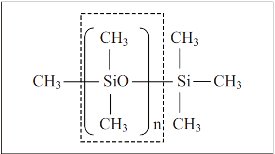 Fig. 1 Structure of Dimethicone (Dimethyl Siloxane Within Broken Line Area)
Here we consider dimethicone, a pharmaceutical that is prescribed to reduce flatulence, the production of excessive gas in the gastrointestinal tract. The structure of dimethicone is shown in Fig. 1. According to the USP, the ATR method is used for analysis of dimethyl siloxane [-(CH3)2SiO-]n in dimethicone2). Using this method, the infrared spectrum of the sample is measured, and the absorbance value at 1259 cm-1 due to the bending vibration of CH3 is determined, thereby allowing management of dimethyl siloxane content (portion within broken line area of Fig. 1). The formula below is used to calculate the content of dimethyl siloxane.
100 (AU/AS)(DS/DU)....(1)
Here, AU is the absorption of dimethicone at 1259 cm-1, AS is the absorption at 1259 cm-1 using USP standard, DU is the specific gravity of dimethicone, and DS is the specific gravity of the USP standard.
Measurement of Dimethicone by ATR Spectroscopy
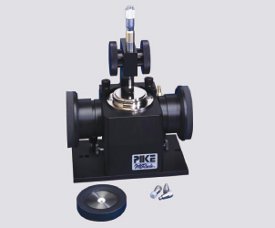 Fig. 2 MIRacle A Single Reflection ATR Accessory
ATR measurement devices include single reflection and multiple reflection accessories, in which the greater the number of reflections, the greater the absorption peak obtained. However, even a single reflection ATR acces sory can be used to obtain a detectabl e absorption peak at 1259 cm-1 generated by the bending vibration of CH3. Furthermore, measurement can be conducted using just a small quantity of sample, while the cleaning of the prism between analyses is simple as well. Thus, the MIRacle A single reflection ATR accessory shown in Fig. 2 was used here, together with a Ge prism.
The analytical conditions are shown in Table 1. The pr i sm was cleaned af ter each of the 3 repeat measurements to investigate the repeatability of ATR measurement.
Table 1 Analytical Conditions
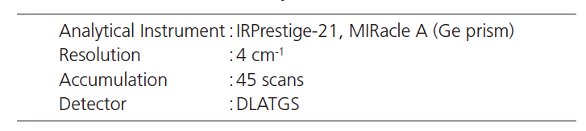
Fig. 3 shows the overlaid ATR spectra obtained from measurement of a USP standard sample.
 Fig. 3 ATR Spectra of USP Standard Sample
Determination of the Quantity of Dimethyl Siloxane
Measurement was conducted using two dimethicone samples of viscosity 20 cSt and 1000 cSt, respectively (both from Sigma-Aldrich Corporation). The magnified ATR spectra with the characteristic peak in the vicinity of 1259 cm-1 are shown in Fig. 4 and 5.
 Fig. 4 ATR Spectra of Dimethicone with Viscosity of 20 cSt
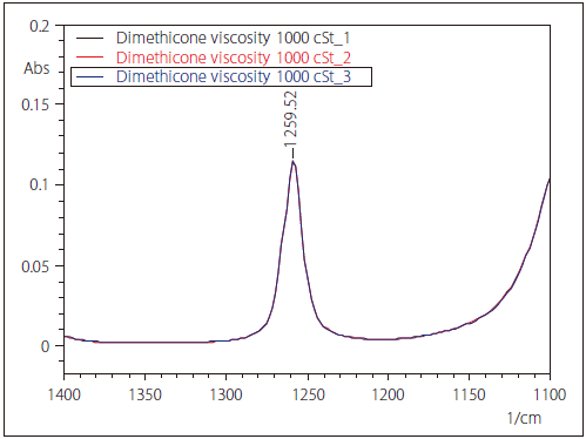 Fig. 5 ATR Spectra of Dimethicone with Viscosity of 1000 cSt
In addition, the absorbance values at 1259 cm-1 for the respective samples are shown in Table 2. Good repeatability was clearly obtained for all the samples.
Table 2 Peak Absorbances at 1259 cm-1
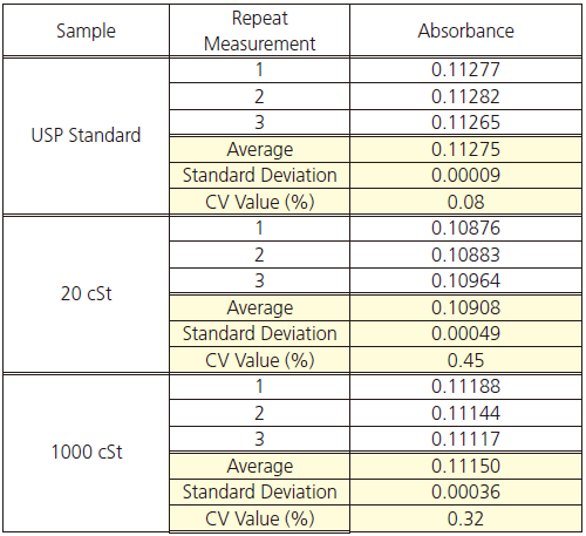
The quantity of dimethyl siloxane in the dimethicone was then determined using the equation (1) on the previous page and the average value of thes e absorbance values. The calculation yielded results of 98.89 %–101.07 % for the 20 cSt viscosity sample, and 98.89 % for the 1000 cSt viscosity sample, with both samples within the 97 %–103 % range of the USP standard values. Regarding the specific gravities of the samples, the maximum and minimum values specified in the USP were used.
Conclusion
Viscous dimethicone samples were analyzed by ATR spectroscopy, and excellent repeatability was obtained. Quantitative analysis by the solution method has the advantage of high sensitivity with the ability to detect low-level absorption through appropriate selection of a solid cell. However, for analysis of samples having some degree of viscosity, as those presented here, the ATR method with its simple measurement and easy cleaning of the prism, is very effective.
[References]
- High Polymer Analysis Handbook [A New Edition] Edited by Polymer Analysis and Research Round-Table Conference, The Japan Society for Analytical Chemistry
- USPC Official Monographs: Dimethicone